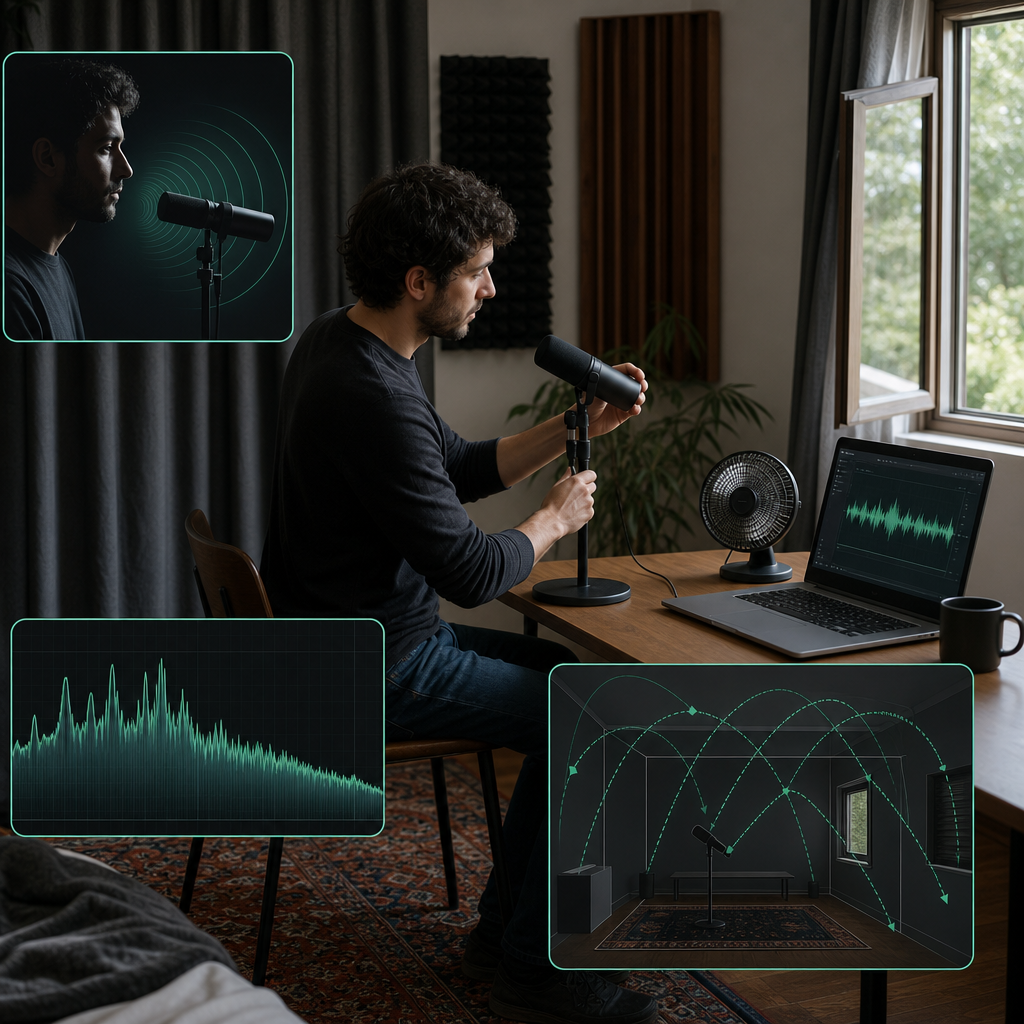
Electrical
Power hum and equipment buzz
Reduce the low tonal sound caused by power systems, cables, adapters, and nearby electronics.
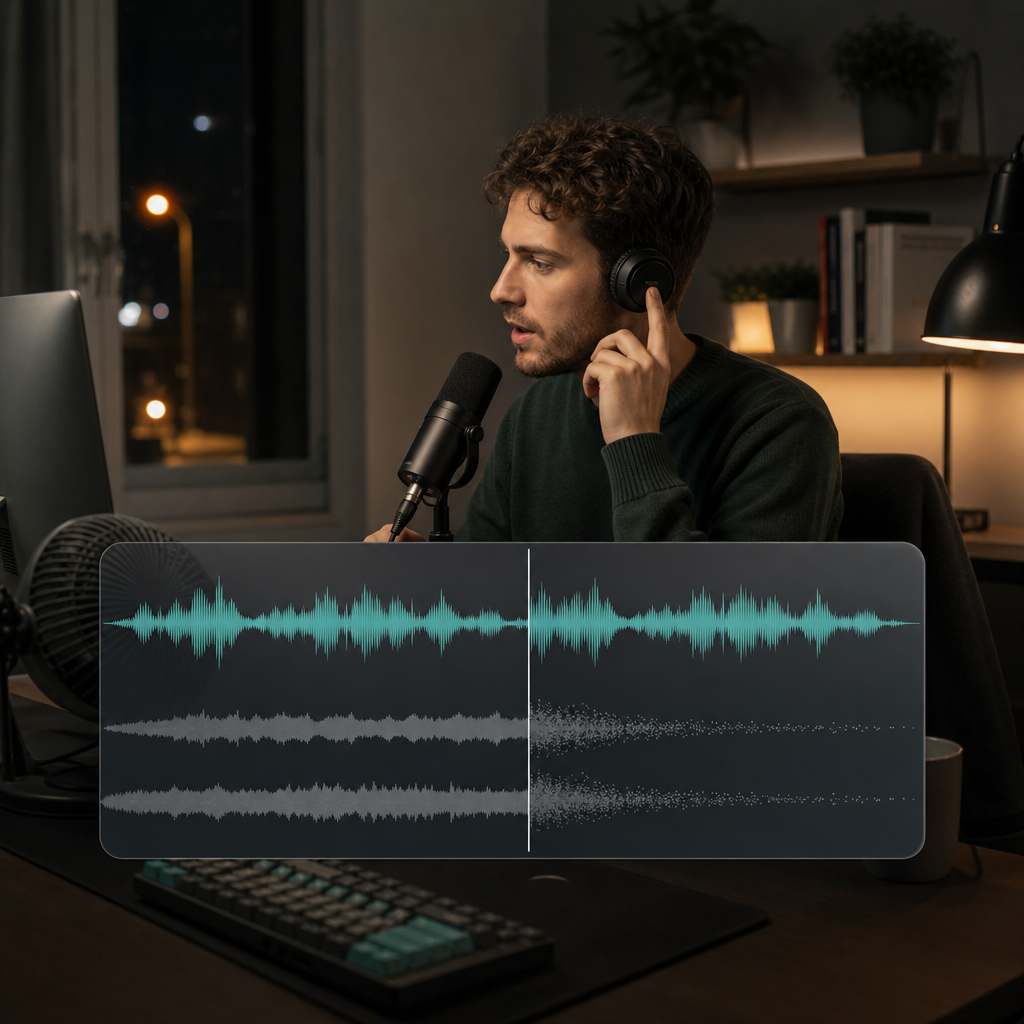
To remove background noise from audio without damaging speech, reduce steady interference while protecting voice body, breaths, and quiet word endings. This works best for usable meetings, lectures, interviews, voice notes, and podcasts affected by hum, hiss, fans, or low rumble.
Stable background layers are usually easier to reduce because their pattern changes less than the speech.
Electrical
Reduce the low tonal sound caused by power systems, cables, adapters, and nearby electronics.
Mechanical
Calm continuous broadband noise from cooling systems and office equipment that sits under every sentence.

Recording floor
Reduce the fine high-frequency layer that becomes obvious during pauses and soft speech.

A cleaner background matters only when the speaker remains intact.
LOW
Hum and hiss should become less noticeable during both speech and pauses.
FULL
Midrange tone should remain stable instead of turning thin or hollow.
SOFT
Quiet syllables and breaths should survive the cleanup.
A restrained sequence protects speech better than chasing complete silence.
Listen for hum, hiss, fan noise, or low rumble before evaluating any change.
The background should settle while consonants, breaths, and soft words remain present.
A little residual ambience is usually better than watery or brittle speech.
Speech-led material often gains the most because the listener has a clear focal point.
Meetings
Reduce HVAC, computer fans, and room systems that make long discussions tiring.
Education
Improve comprehension when a soft speaker was recorded in a noisy classroom or home office.
Editorial
Calm steady noise before arranging, mixing, or publishing the spoken material.
The strongest candidates contain continuous, intelligible speech beneath a steadier unwanted layer.
“A useful interview is covered by a constant air conditioner that becomes obvious between every answer.”
Office interview
HVAC noise reduction
“The lecture is clear enough to understand, but laptop fan noise makes an hour of listening exhausting.”
Recorded lecture
Long-form cleanup
“A quiet voice memo has a fine hiss that competes with the softest words.”
Voice note
Noise-floor control
Different playback systems reveal different artifacts.
Fine high-frequency problems are easier to hear close to the ear.
Small speakers reveal whether the speech still has enough midrange presence.
Soft speech shows whether denoise removed information along with the background.
Some recording problems begin before the sound reaches the file.
CLOSE
A closer microphone creates a stronger voice-to-noise ratio than processing alone.
QUIET
Turning off fans and moving away from vents reduces the work required later.
CLEAN
Distortion from overloaded input cannot be fully repaired by noise reduction.
Routine cleanup and forensic restoration are different jobs.
Good fit
Denoise works best when the recording contains usable speech beneath a distracting but manageable layer.
Caution
Crowds, overlapping voices, and intermittent impacts require more careful expectations than steady hum.
Source issue
Heavy room sound and weak direct voice may need more than background reduction.
Choose a subscription for steady production or buy credits when you need flexible generation.
Recovery depends on whether useful speech remains distinct from the unwanted sound.
A free allowance depends on the current plan and credits. Before processing, confirm that the recording contains intelligible speech beneath the noise.
Common speech formats such as MP3 and WAV can benefit when the source contains usable dialogue beneath hum, hiss, or room noise.
Underwater speech usually means reduction is too aggressive or the noise overlaps the same frequencies as the voice. Reduce strength and compare quiet syllables against the original.
Yes. A steady 50 Hz or 60 Hz tone and its harmonics are strong candidates because the interference is narrow and repeatable.
Yes, especially when the fan remains steady and the speakers are reasonably clear.
Not necessarily. A smooth, low ambience often sounds more natural than absolute silence around speech.
The quality test is whether the message becomes easier to hear without losing the speaker.
“The best meeting cleanup reduces the ventilation sound while keeping every soft response understandable.”
Meeting audio
Speech preservation
“A useful lecture still needs natural room tone; removing every trace of space can sound more distracting than the original.”
Lecture audio
Natural ambience
Clean steady hum, hiss, and fan sound while preserving the speech details that carry the recording.