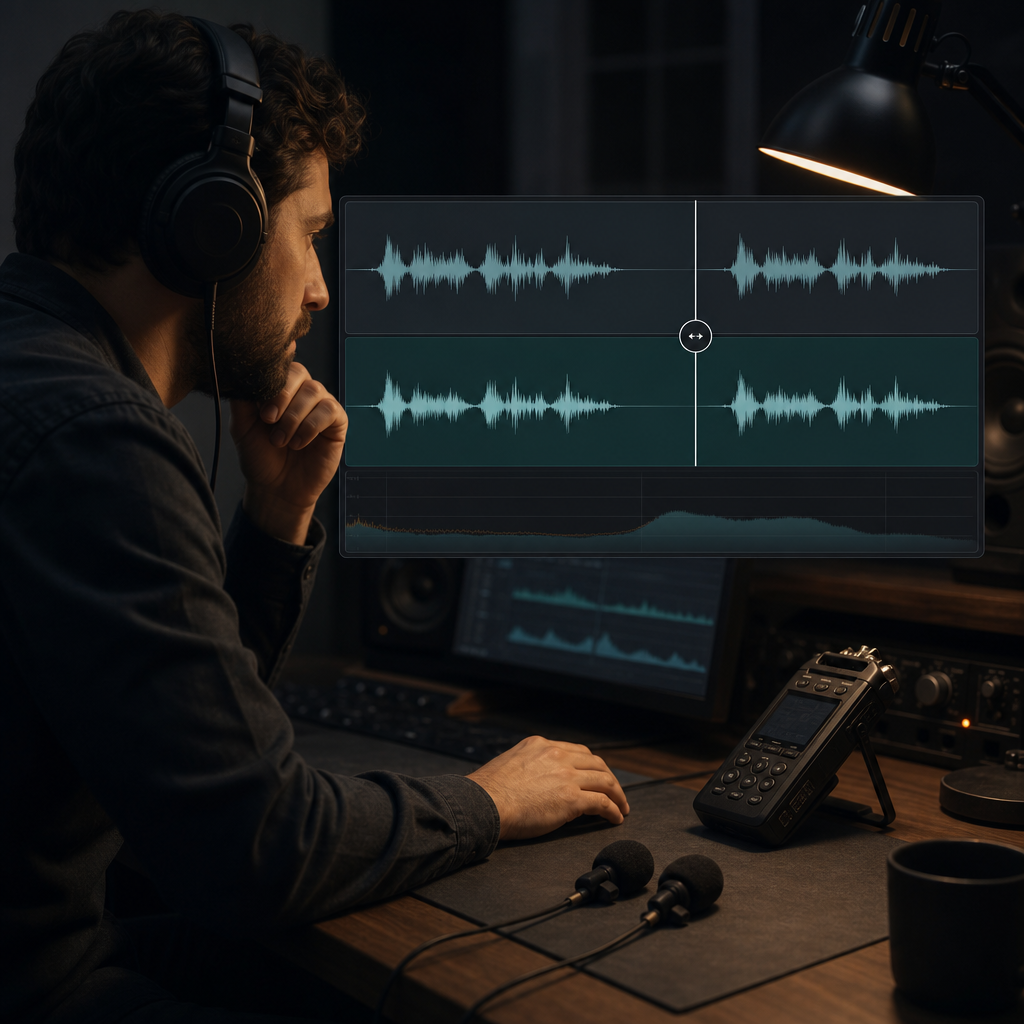
Steady layers
Hum, hiss, and fan noise
These noises usually sit under the whole recording. They are often easier to reduce because their pattern stays relatively stable under the voice.

To remove background noise well, first identify whether the source is steady hiss, electrical hum, fan rumble, street sound, wind, or room reflections. Lower the distraction only far enough to improve speech while preserving natural tone and believable ambience.
Recognizing the noise pattern makes it easier to choose a realistic cleanup goal.
Steady layers
These noises usually sit under the whole recording. They are often easier to reduce because their pattern stays relatively stable under the voice.
Environmental sound
These are messier because they change over time. They often overlap with speech and can make a recording sound farther away even when the words are still audible.

Changing noise
Transient sounds change quickly and may overlap with speech. A realistic cleanup goal lowers distraction while protecting quiet words and phrase endings.
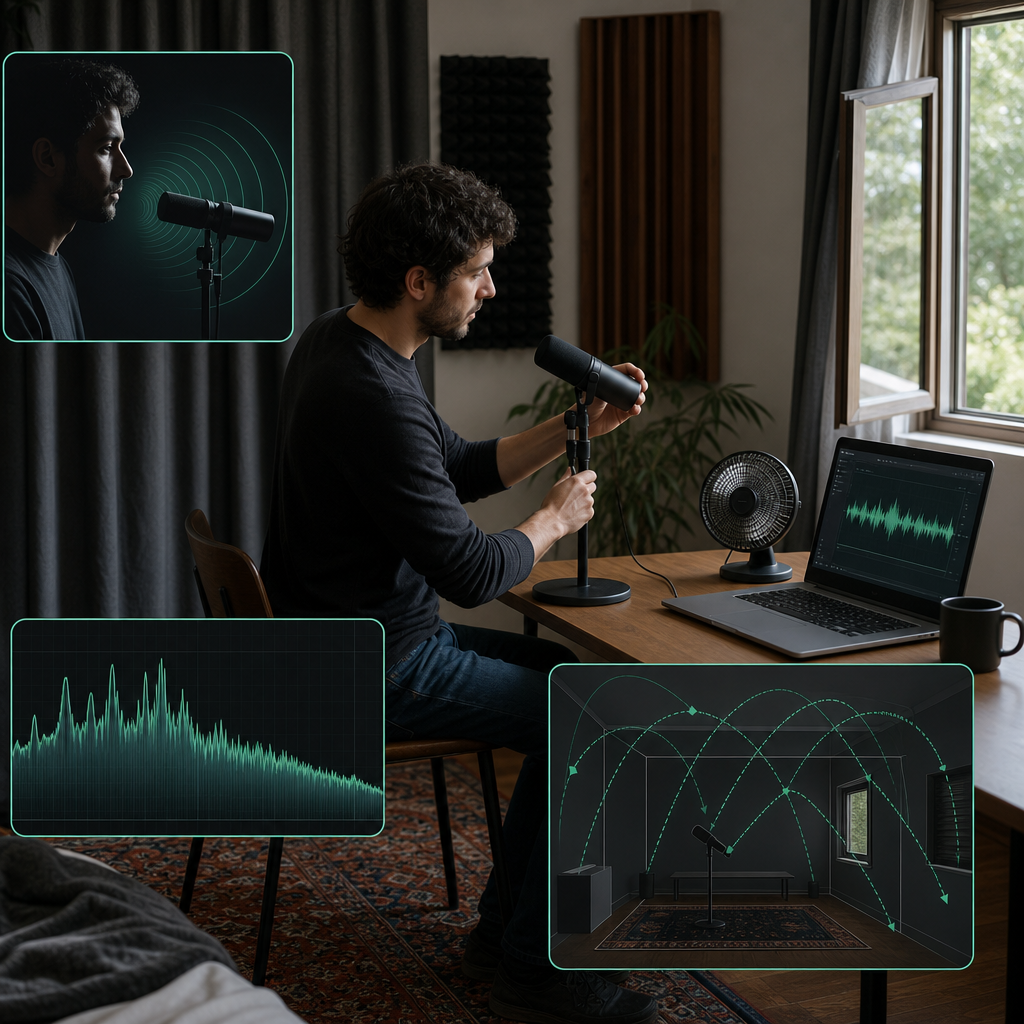
People notice outcome quality in the ear before they can describe it in technical terms.
LOWER
The background should step back enough that the speaker feels easier to follow.
STEADY
The voice should stay believable. Good reduction removes distraction without hollowing out the midrange.
SAFE
Silent gaps should sound calmer, not gated, pumping, or unnaturally empty.
The sequence matters because not all recording problems respond to the same kind of cleanup.
Hum, hiss, and fan noise behave differently from traffic bursts, keyboard hits, crowd sound, or wind. That affects what kind of result is realistic.
A steady noise layer, room reflections, and a distant microphone require different expectations even when each one makes a recording harder to understand.
Complete silence is not the goal. The real question is whether the message is easier to hear and trust.
The recording type changes the listening checks and the amount of ambience worth preserving.
Audio path
Audio-first visitors usually care about intelligibility, comfort, and lower distraction over time, especially in speech-led files.
Short recordings
Short speech clips benefit from fast clarity checks around consonants, pauses, and sudden background sounds.
Long recordings
Long-form audio needs a stable noise floor and comfortable tone that remains natural over many minutes.
A constant fan, a moving street, and a reflective room should not be treated as the same source problem.
“I did not need a studio lesson. I needed to know if the hiss under my voice could be reduced without ruining the take.”
Course creator
Lecture recording cleanup
“My issue was an outdoor interview recording. The speaker was understandable, but traffic and wind made the whole conversation feel messy.”
Field interviewer
Portable recorder cleanup
“This keyword is broad, so the useful pages are the ones that explain the different kinds of noise instead of pretending they are all the same.”
Podcast editor
Speech restoration
A quick quality check helps prevent over-processing.
Artifacts often show up there first, especially if the cleanup is chewing into the voice while trying to remove the background.
A recording can become technically quieter while feeling less believable. The right amount of ambience is often better than a dead, processed void.
The best pass usually feels less distracting, not more dramatic.
These mistakes appear across voice notes, podcasts, interviews, meetings, and field recordings.
TOO MUCH
Aggressive passes can make the voice metallic or watery, which often feels worse than the original noise.
WRONG GOAL
Most useful cleanup jobs aim for a better listening balance, not absolute absence of ambience.
MISREAD
Room reflections often need source-side fixes or different expectations rather than simple denoise logic.
Useful room and location sound can remain while the most distracting layer moves behind the voice.
Speech
These details carry intelligibility and often disappear first when reduction becomes too strong.
Background
A low, steady ambience sounds more natural than pumping or abrupt silence between phrases.
Context
Speech recordings often sound more believable with a low, steady ambience than with abrupt artificial silence.
Choose a subscription for steady production or buy credits when you need flexible generation.
The noise pattern and the voice-to-noise ratio determine what can be reduced safely.
Not always. Background noise can often become far less noticeable, but complete silence is a poor target when it removes consonants, voice body, or natural ambience.
No. A voice note, podcast, interview, and field recording can require different balances between clarity, room tone, and long-form listening comfort.
Steady fan noise, hiss, and electrical buzz are usually easier to reduce because their spectrum changes less than crowds, wind gusts, traffic, or room echo.
That usually happens when the reduction is too aggressive or the source problem is being treated like a simpler kind of noise than it really is.
Noise usually adds a competing layer, while echo repeats and smears the voice itself. They create different symptoms and need different expectations.
Check quiet words, phrase endings, natural pauses, and whether the background settles without becoming artificial.
The best match is a visitor who knows the recording is usable, but knows the background is making it harder to trust or publish.
“I wanted a page that explained the difference between hum, hiss, and outdoor noise before pushing me into one generic fix.”
Freelance editor
Mixed media cleanup
“It helped me understand that the right outcome is a calmer background and a natural voice, not total silence at any cost.”
Teacher
Online lessons and webinars
Compare the raw recording against a cleaner version and decide whether the speech now sounds easier to follow without losing its natural character.