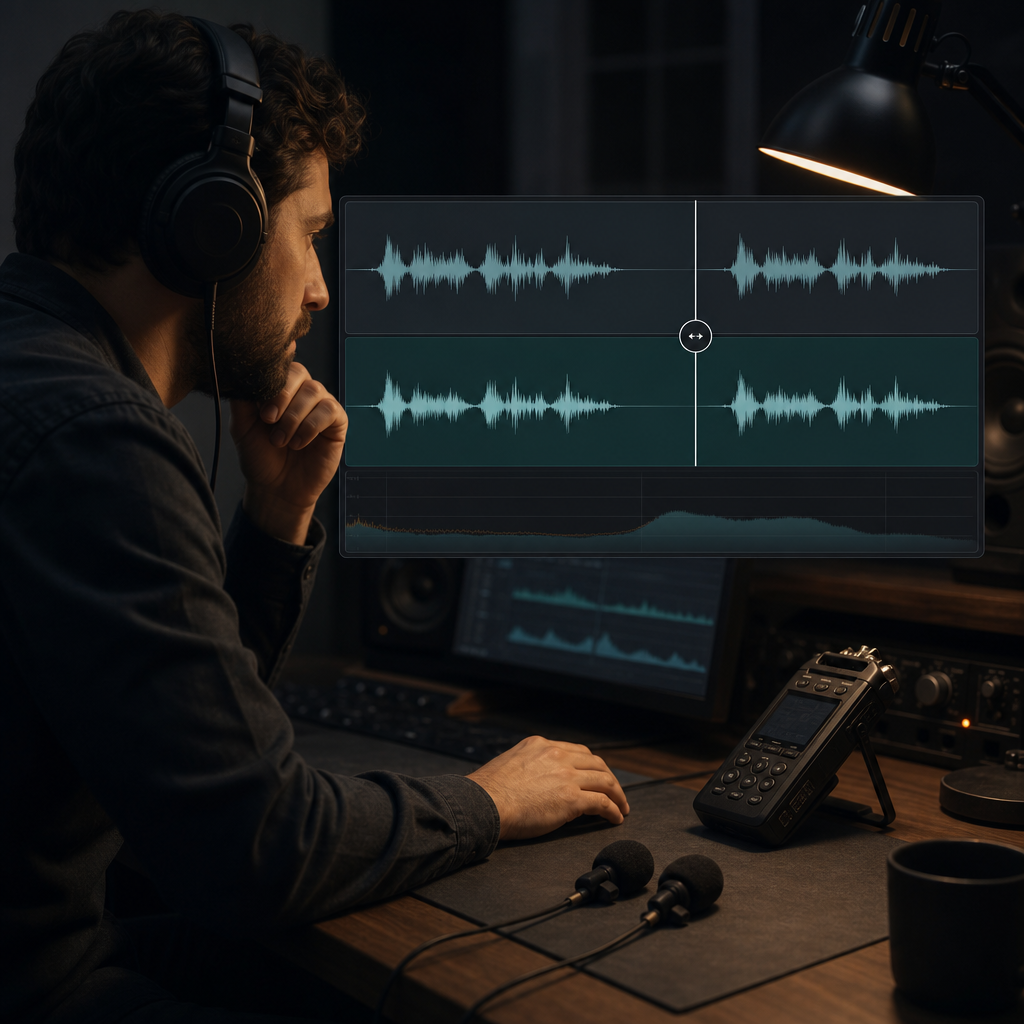
Room sound
Reduce echo around the host
Soften the hollow reflections that make home offices and untreated rooms sound larger than they are.
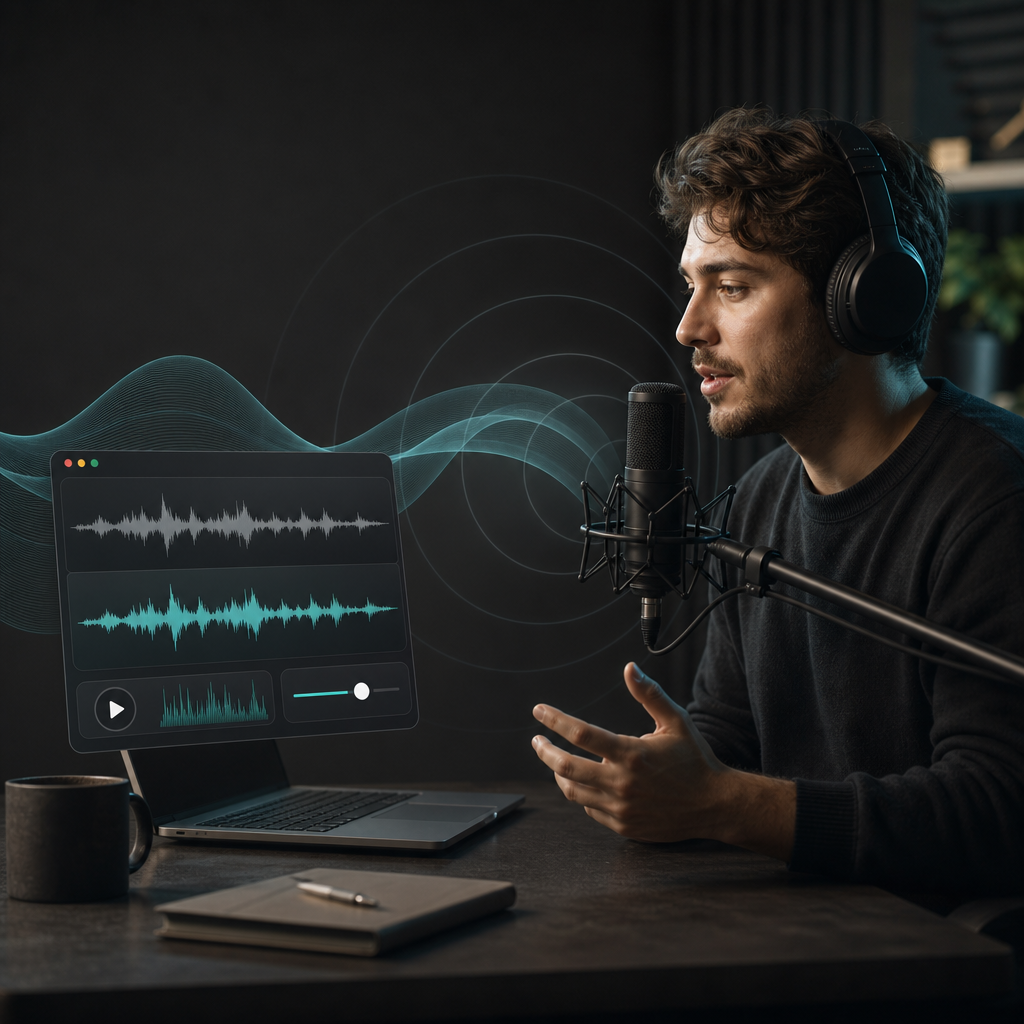
A podcast audio enhancer improves speech consistency when episodes contain uneven speakers, room reflections, or soft microphone takes. Preserve each speaker's personality while making dialogue closer, steadier, and easier to follow.
A professional episode depends less on dramatic effects and more on stable, comfortable speech.
Room sound
Soften the hollow reflections that make home offices and untreated rooms sound larger than they are.
Level
Improve the consistency between speakers so listeners are not constantly adjusting volume during an interview.
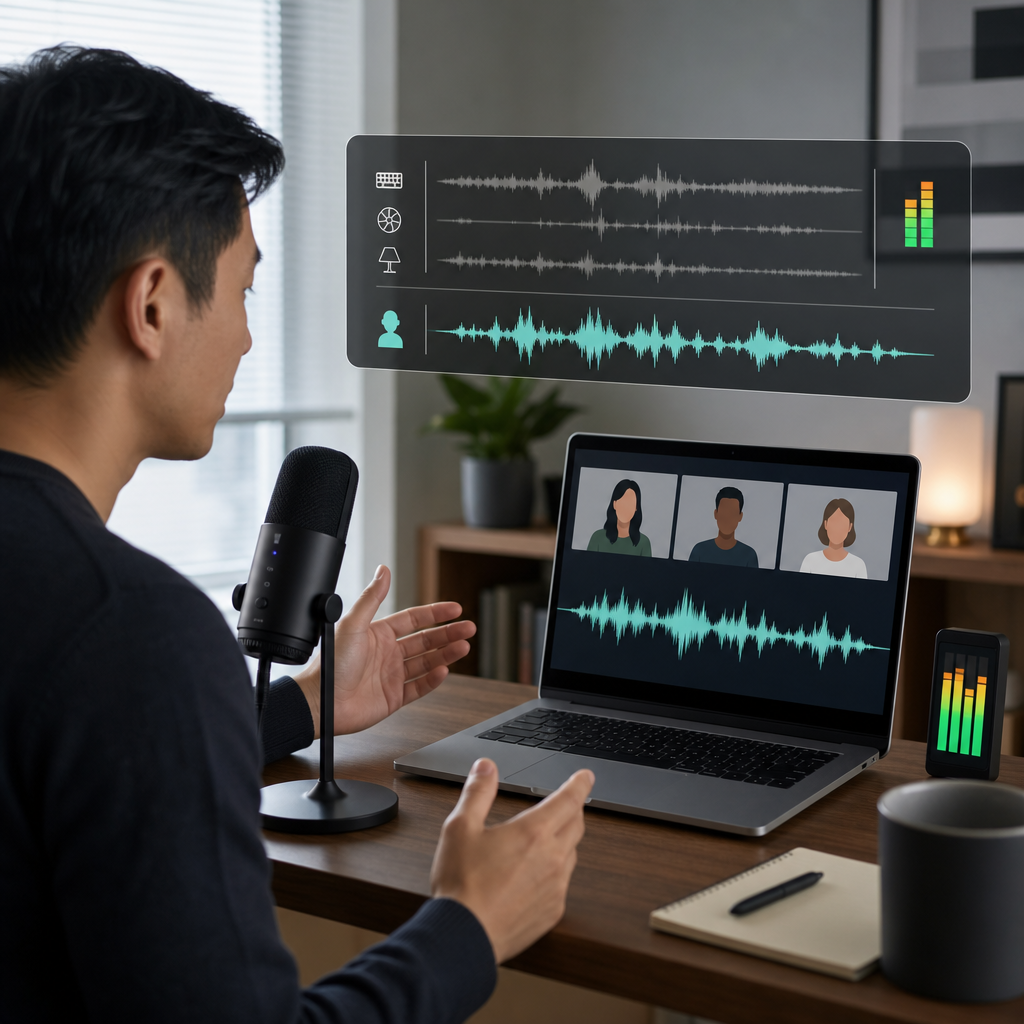
Tone
Give thin microphone takes more body while keeping consonants clear and natural.
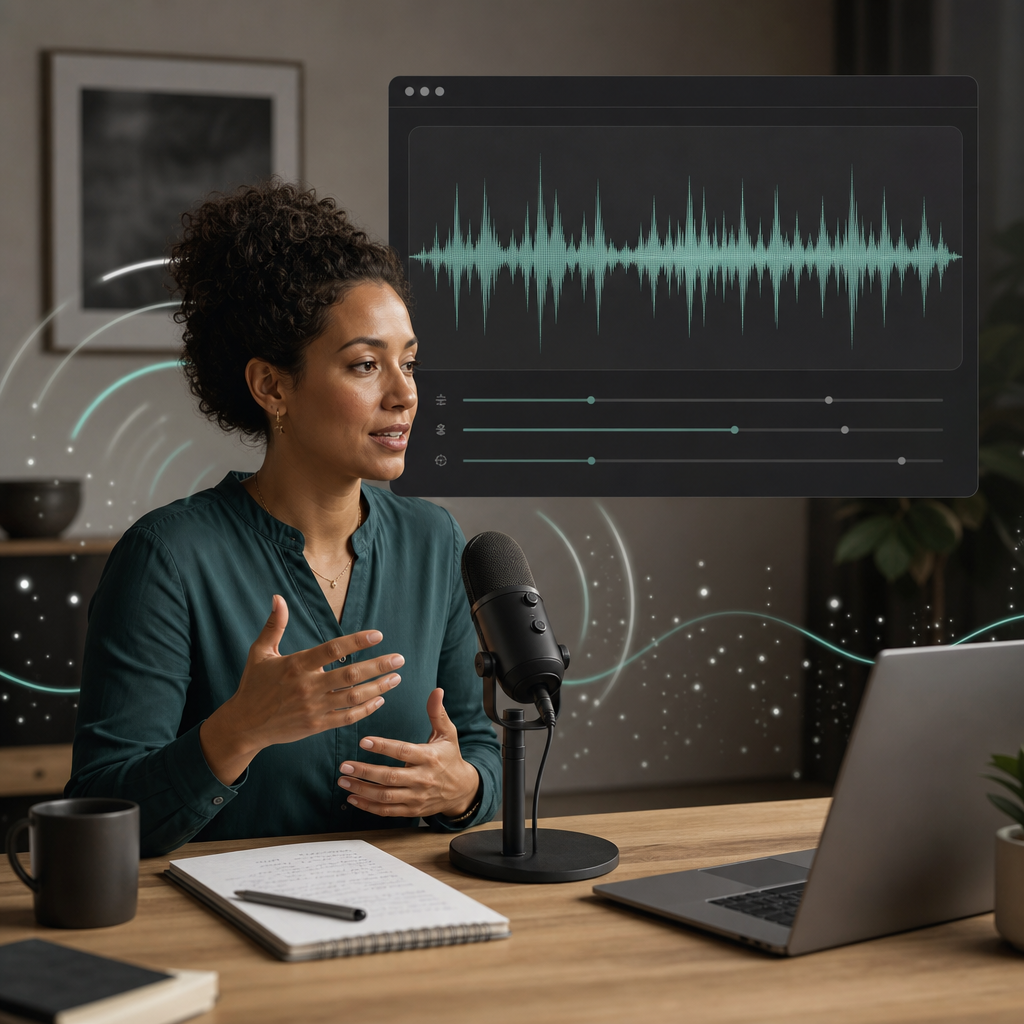
Listeners stay with a conversation when speech remains clear, balanced, and believable.
EVEN
Hosts and guests should feel part of the same conversation even when they recorded on different devices.
DRYER
Less echo makes words feel closer without stripping away every trace of space.
SMOOTH
A full episode should remain comfortable through headphones, cars, and small speakers.
Evaluate the episode in the order listeners experience it.
A quiet guest, distant host, or roomy remote track usually sets the quality ceiling for the whole conversation.
Speaker changes should feel natural rather than jumping between loud, soft, bright, and muffled.
Longer listening reveals fatigue, pumping, and tonal imbalance that short previews can hide.
Solo narration, remote interviews, and roundtable episodes create different audio challenges.
Solo
Strengthen presence and reduce room tone so a single host can carry attention without sounding aggressively processed.
Remote
Balance the contrast between a strong studio mic and a guest captured on a laptop or phone.
Roundtable
Reduce the effort required to follow speakers with different distance, tone, and natural volume.
Remote microphones, room reflections, and speaker imbalance require different listening checks.
“The guest has the best story in the episode, but their laptop mic sounds thin and far away.”
Remote interview
Guest voice restoration
“The host sounds clear, yet the untreated office adds a distracting tail after every phrase.”
Home studio
Room echo reduction
“Three speakers were recorded at different levels and the conversation feels tiring to follow.”
Roundtable episode
Dialogue balance
Podcast audio has to work for sustained listening, not just a dramatic before-and-after moment.
Natural expressive sounds should remain intact instead of being clipped or flattened.
Headphones reveal artifacts while small speakers show whether dialogue still carries clearly.
An episode feels polished when both energetic moments and soft comments remain controlled.
Raising level cannot solve room echo, veiled diction, or mismatched microphones.
DEPTH
Fuller midrange helps speech feel present without relying on excessive loudness.
DETAIL
Improved consonants and phrase endings make dialogue easier to follow.
MATCH
Consistent tone across speakers creates a more cohesive listening experience.
Detailed editors remain useful for difficult recordings, but routine speech improvement often needs a shorter path.
Routine episodes
Recurring shows benefit from a consistent enhancement approach that does not require rebuilding a long effect chain every week.
Small teams
Creators can focus on the conversation while still improving common room, level, and presence problems.
Quality control
Before-and-after comparison remains the most useful test of whether a podcast actually became easier to hear.
Choose a subscription for steady production or buy credits when you need flexible generation.
Judge improvement across speaker changes and several minutes of dialogue, not one polished sentence.
Yes, moderate room reflections can often be softened. Severe echo is embedded in the voice and may still require better microphone placement, acoustic treatment, or a new recording.
It can improve perceived consistency between a quiet guest and a loud host, but several speaker changes must be checked for jumps, pumping, and tonal mismatch.
The goal is similar: clearer, more polished speech. The important comparison is how natural the voice remains and how well the result fits the episode.
A good result should preserve natural expression. Breaths and pauses are part of believable speech unless they are unusually distracting.
Yes. An MP3 podcast is a good candidate when speech remains intelligible but lacks presence, balance, or clarity; heavy clipping and severe codec damage are harder limits.
Check speaker balance, room echo, phrase endings, laughter, and whether the episode stays comfortable over a longer sample.
The listener should be able to settle into the conversation without thinking about the recording setup.
“A solo show needs warmth and presence, but too much brightness becomes exhausting by the middle of the episode.”
Solo podcast
Natural voice tone
“A remote interview succeeds when both people feel close enough to belong in the same conversation.”
Interview podcast
Speaker continuity
Improve speech focus, reduce room distractions, and balance the voices that carry your episode.